

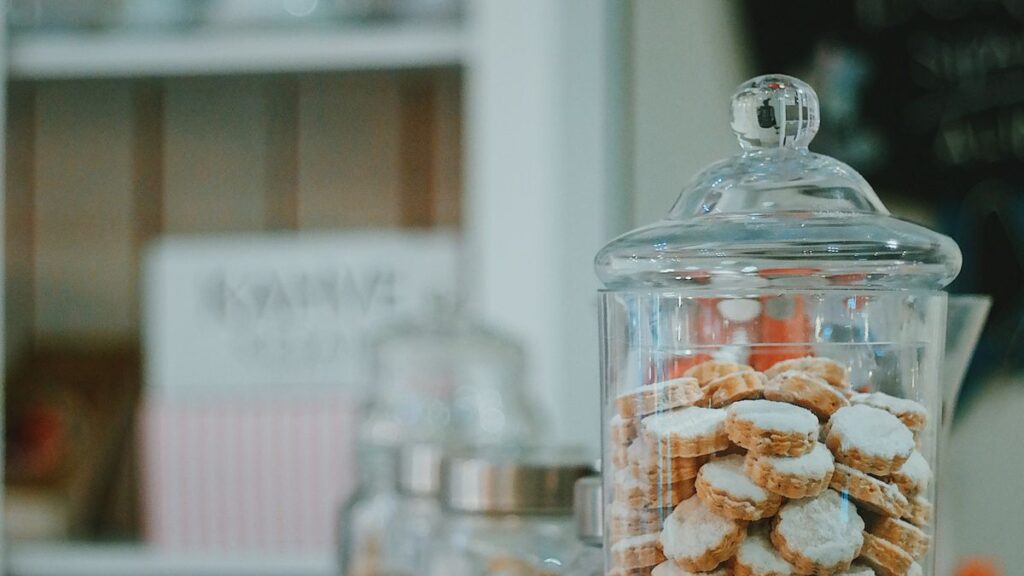
Cottage food laws are state rules that let you sell certain foods made in your home kitchen, usually shelf-stable items like cookies, breads, cakes and jams, without renting a commercial kitchen. Every state writes its own rules, so what you can sell, where you can sell it and how much you can earn depends on where you live. This guide covers the basics for a home bakery, compares six states where many Muslim-owned food businesses operate, and explains why catering is a different license.
Last updated November 11, 2026. State details below were checked on each agency’s official page on that date. This is general information, not legal advice. Rules change, so confirm with your state or local health department before you sell.
What is a cottage food business?
A cottage food business makes low-risk foods in a home kitchen and sells them directly to customers. Low-risk usually means foods that do not need refrigeration to stay safe: breads, cookies, brownies, fruit pies, candy, granola, dry mixes and many jams.
Most states leave out foods that need time or temperature control, such as cheesecake, cream or custard pies and cream cheese frosting. Meat, poultry and seafood are almost always excluded.
Cottage food rules in six states
These six states show how different the rules can be. Each state name links to the official agency page.
| State | Sign-up needed? | Yearly sales limit | Where you can sell |
|---|---|---|---|
| Texas | No permit. State registration only in some cases, such as selling refrigerated foods | $150,000 | Direct to customers. Online orders must be delivered in person by you, an employee or a household member |
| Virginia | No inspection, permit or fee under the home kitchen exemption | None stated for baked goods | Direct to individuals in Virginia, including by phone or internet, with delivery in person, by mail or by delivery service |
| Illinois | Yes. Register with your local health department | None, per the state’s cottage food guide | Direct to customers only: markets, from home, delivery, online, and shipping within Illinois |
| New York | Yes. Free Home Processor Registration with the state | None stated | Within New York: markets, craft fairs, home delivery, internet sales, and wholesale to local restaurants, cafes and grocers |
| California | Yes. Class A registration or Class B permit from your county environmental health office | $75,000 (Class A) and $150,000 (Class B) on the state page; an adjusted limit is published each year | Class A: direct sales. Class B: direct sales plus sales through permitted shops and restaurants |
| Michigan | No license, registration or inspection | $50,000, or $75,000 for products priced at $250 or more each | Direct to customers in Michigan, including markets, internet and mail order when the customer can interact with you before the sale |
Three of these changed recently. Texas raised its limit to $150,000 under a law that took effect September 1, 2025. Virginia’s July 2026 guidance allows internet sales and delivery by mail inside the state. Michigan raised its limit and opened up online sales in 2026. Older articles may still show the old rules, so always read the agency page itself.
Do I need training or a food handler card?
It depends on the state. Texas requires the operator to complete an accredited basic food handler course. California requires cottage food operator training within three months of registering. Illinois’ state guide calls for a Certified Food Protection Manager certificate before your registration is approved. Michigan does not require training.
Even where it is optional, a food handler course costs little and gives customers one more reason to trust you. If you would rather not handle delivery and marketing yourself, some home cooks sell through marketplaces such as Yalla Bites in Plano, TX.
What has to go on the label?
Every state on this list requires a label. Expect to include the product name, your name and address (or a registration number where the state allows it), ingredients in order by weight, net weight and major allergens.
Most states also require a home-kitchen statement in set wording. Michigan’s is “Made in a home kitchen that has not been inspected by the Michigan Department of Agriculture & Rural Development.” Virginia’s is “NOT FOR RESALE — PROCESSED AND PREPARED WITHOUT STATE INSPECTION.” Copy your state’s wording exactly from the agency page.
If you tell customers your products are halal, list every ingredient clearly and be ready to answer questions about items like gelatin, flavor extracts and sprinkles. Clear labels build trust faster than any slogan.
Can I run a catering business from home?
In most states, no. Catering usually means meals with meat, rice dishes and other foods that need refrigeration, and those fall outside cottage food rules. Michigan’s agency says a producer of temperature-controlled foods “does not qualify as a cottage food operator.” Virginia’s agency tells would-be caterers to contact the Virginia Department of Health, and New York says catering businesses are regulated by its Department of Health.
Texas is a partial exception. It now allows most refrigerated foods with state registration, but still not meat, poultry or seafood.
If your plan is biryani trays, kabob platters or full event menus, call your county health department first and ask what license and kitchen you need. Many caterers start by renting time in a licensed shared kitchen. For ideas on how established caterers present their menus, see our guide to holiday catering from Muslim-owned restaurants.
Six steps to start a home bakery
- Read your state’s cottage food page. Confirm your products are on the allowed list.
- Check local rules. Zoning, homeowner association and rental rules can still apply to a home business.
- Register or get your permit if your state or county requires it, and finish any required training.
- Set up the business side. The SBA explains how to register your business and what licenses you may need. Our guide on how to register an LLC covers the filing steps and state fees.
- Design a compliant label and track every sale, so you know where you stand against your state’s limit.
- Get found. Add your business to Muzlist for free so local families can find you by state and category.
Still choosing what to sell? Our list of halal business ideas has more options beyond baking.
Where home bakers find their first customers
Cottage food rules favor direct sales, which suits how community businesses grow anyway. Eid bazaars, masjid fundraisers that allow vendors, weekend farmers markets and neighborhood group chats are common starting points. Ask each event organizer what paperwork they need from food vendors, because some ask for proof of registration or insurance.
Online, a complete directory listing and a few good photos do a lot of work. See free ways to promote your Muslim-owned business and how to write a directory listing that gets calls.
Bakers and dessert makers already listed on Muzlist include Classified Crumbs in Carrollton, Texas (see our feature on its small-batch cookies), The Sweet Flip in McKinney, Texas, and La Belle Crème Bakery in Avenel, New Jersey. Browse more in Food, Drinks & Hospitality, and confirm halal details directly with each business.
When you outgrow your home kitchen
You have outgrown cottage food when you want to sell refrigerated desserts, ship to other states, supply stores in a state that bans wholesale, or pass your state’s sales limit. The next step is usually a licensed kitchen and a food establishment permit from your state or county. Plan for it early, so growth does not catch you by surprise.
List your food business on Muzlist
Muzlist is a free Muslim business directory covering every state. Whether you sell cookies from your kitchen or cater weddings, add your business today. Basic listings are free.
Frequently asked questions
Do I need a license to sell baked goods from home?
It depends on your state. Michigan requires no license or registration, Texas requires no permit in most cases, and Illinois, New York and California require registration or a permit. Check your state agency’s cottage food page.
How much can I earn under cottage food laws?
Limits vary. As of November 2026, Texas lists $150,000 a year and Michigan lists $50,000, while Illinois and New York state no sales limit. California sets separate limits for Class A and Class B operations.
Can I sell home-baked goods online?
Often yes, within your own state. Virginia, Illinois, New York, California and Michigan allow some form of internet sales, and Texas allows online orders that are delivered in person. Shipping to other states is generally not allowed.
Can I cater meals with meat from my home kitchen?
In most states, no. Cottage food laws cover shelf-stable foods, and catering is regulated by health departments. Contact your county health department before you take catering orders.