

Something unusual has happened in American coffee over the last few years. Yemeni cafes, once found only in a handful of neighbourhoods, have spread across the country — and they are full, late, and largely by young people.
They are doing something the major chains never managed: creating a space that is genuinely social, open late, and entirely comfortable for people who do not drink.
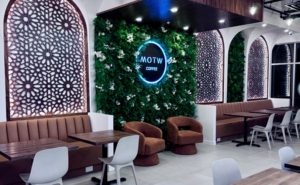
Qamaria Coffee in Sterling is listed on Muzlist under Food, Drinks & Hospitality. Its listing describes a spacious, cosy two-storey cafe at Shoppes at Potomac Corner serving authentic Yemeni coffee, signature spiced lattes, teas and fresh pastries.

Why Yemen matters in coffee history
Coffee cultivation and trade have deep roots in Yemen, and the port of Mokha gave its name to a term still used in cafes worldwide. For centuries, coffee reaching Europe and beyond passed through Yemeni hands.
That history is why a Yemeni cafe is not a novelty concept. It is a return to a tradition that was interrupted by the industrialisation of the coffee trade.
What makes Yemeni coffee taste different
Several things separate it from a standard American cafe cup.
The beans
Yemeni coffee is typically grown at high altitude on terraced mountain farms, often dry-processed. The result tends toward complex, fruity, winey and spiced notes rather than the straightforwardly roasty profile many people expect.
The spices
Cardamom is the signature. Ginger, cinnamon and cloves appear too. These are not flavourings added to mask coffee; they are part of how the drink has been prepared in the region for generations.
The preparation
Traditional Yemeni preparations differ from espresso-based drinks in method and in serving style, and many cafes offer both alongside each other.
What to order on your first visit
If the menu is unfamiliar, a few starting points help.
Adeni chai
Black tea brewed with milk and spices. Rich, sweet and deeply comforting. Often the drink people come back for.
A spiced latte
Signature spiced lattes are usually where a Yemeni cafe expresses its house style. Ask what the staff recommend rather than defaulting to what you order everywhere else.
Something traditional
If the menu lists a traditional Yemeni preparation, try it at least once. It will not taste like what you are used to, which is the point.
Pastries
Fresh pastries alongside coffee are standard. Sweet or savoury, they are part of the experience rather than an afterthought.
Two storeys and why the layout matters
The listing describes a spacious two-storey cafe, and the space is a large part of why these cafes work.
Most American coffee shops are designed to move people through. Yemeni cafes are designed for people to stay. Room to sit with a group, tables that accommodate more than two, and an atmosphere that does not signal you should leave after forty minutes.
That design choice is what makes them viable as social spaces rather than transaction points.
Open late, and why that is significant
Later opening hours change what a cafe is for. After Isha, after a shift, after a study session, after a family dinner — that is when these places fill.
For Muslims in particular, a good late-night option that is not a bar has always been scarce. Yemeni cafes filled that gap and found an audience far beyond the Muslim community, because plenty of people want somewhere to sit at ten at night without alcohol.
The wider phenomenon
The growth of Yemeni coffee chains across the United States is one of the more interesting Muslim business stories of recent years. It demonstrates something worth noticing: a product rooted in a specific heritage, presented well and without apology, can find a broad mainstream audience.
That is a lesson for Muslim entrepreneurs in every category. Authenticity is not a limitation on your market. Frequently it is the reason people come.
We explore that idea further in our guide to reaching Muslim customers.
Sterling and the surrounding area
Sterling sits in eastern Loudoun County, near Ashburn, Herndon and Reston, in an area with a large and settled Muslim population. Shoppes at Potomac Corner puts the cafe in an accessible retail setting rather than tucked away.
There is more than one Muslim-owned cafe in Sterling — you can also read about Qahwa Cafe inside ADAMS Sterling — and browse the full Muzlist directory for halal food and drink across Virginia.
Making the most of a visit
Go with people rather than alone the first time, so you can try more than one drink. Ask the staff what the house specialities are. Go later in the evening for the atmosphere, or earlier if you want a quiet table to work at. And do not judge the coffee by whether it tastes like your usual order, because it is not trying to.
The Qamaria Sterling listing on Muzlist includes its location, phone number and an inquiry form that reaches the cafe directly.
Frequently asked questions
Where is Qamaria Coffee in Sterling?
Qamaria Sterling is located at Shoppes at Potomac Corner in Sterling, Virginia, and is listed on Muzlist under Food, Drinks and Hospitality.
What is Yemeni coffee?
Coffee grown and prepared in the Yemeni tradition, typically high-altitude and dry-processed with complex fruity and spiced notes, often served with cardamom and other spices.
What should I order at a Yemeni cafe?
Adeni chai is a popular starting point, along with the house signature spiced latte. Ask staff what they recommend, and try a traditional preparation at least once.
Is Qamaria Sterling a good place to sit and work?
Its listing describes a spacious, cosy two-storey cafe, and Yemeni cafes are generally designed for people to stay rather than pass through.
Are there other Muslim-owned cafes in Sterling?
Yes. Qahwa Cafe inside ADAMS Sterling is another option, and more can be found in the Muzlist directory.
Try something you cannot order at a chain
Go in the evening, order the adeni chai, and stay longer than you planned. Find Qamaria Sterling on Muzlist, browse the directory for more Muslim-owned cafes, or list your business free.